August 30, 2026
Fishing License vs Boating License: Do You Need Both?
They sound like the same errand, but they come from different laws and in California from different agencies. The fishing license follows the person catching fish; the boating card follows the person at the helm.
By Kevin O'Neil
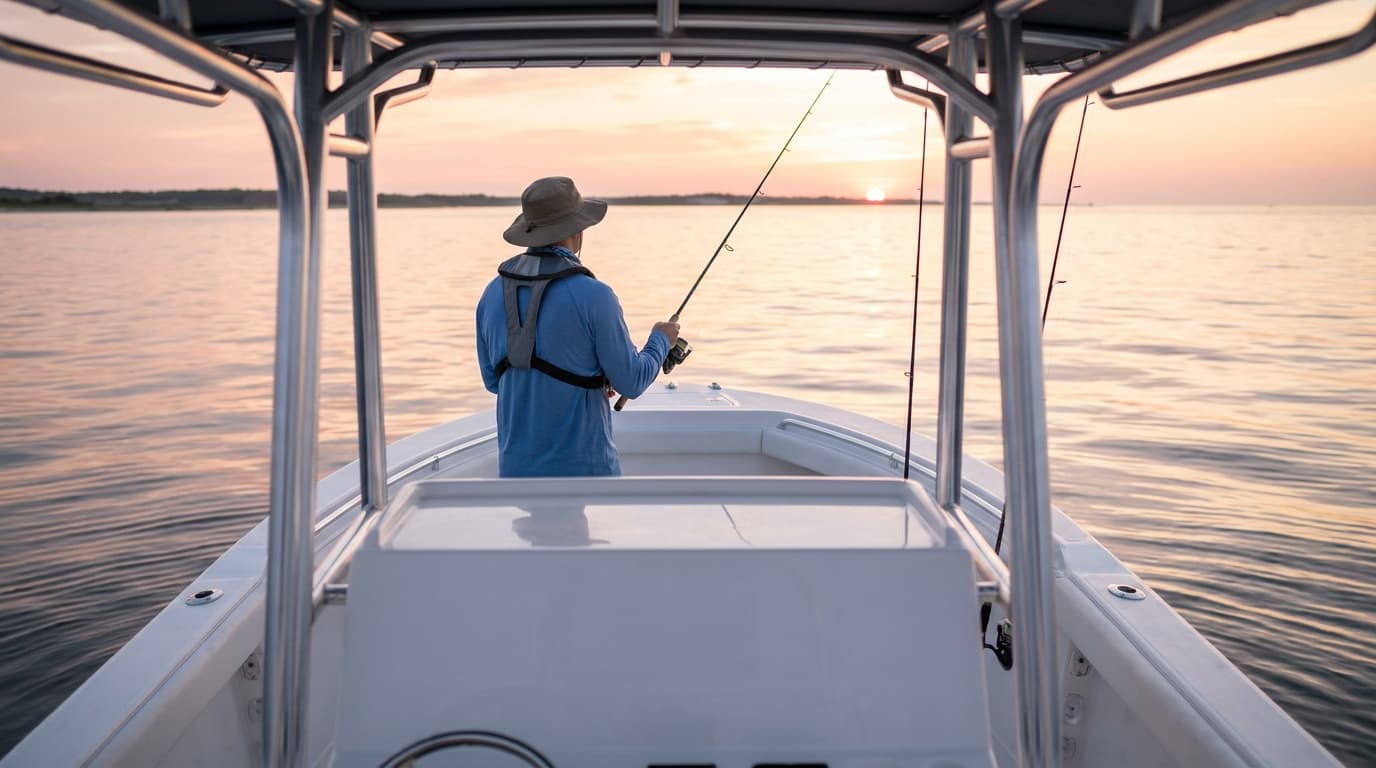
They sound like the same errand. They are not. A fishing license gives you permission to catch fish. A boating safety card gives you permission to operate a motorized vessel. They come from different laws, cover different activities, and in California they are not even issued by the same agency.
If you plan to run a boat and put a line in the water, you almost certainly need both. Here is exactly who needs what in Florida and California, what each one costs, and the scenarios where people get it wrong.
The Short Answer
| What you are doing | Fishing license | Boating card |
|---|---|---|
| Fishing from shore or a pier | Usually yes | No |
| Driving a motorboat, not fishing | No | Usually yes |
| Driving a motorboat and fishing | Yes | Usually yes |
| Riding as a passenger and fishing | Yes | No |
| Paddling a kayak, not fishing | No | No |
| Kayak fishing (no motor) | Yes | No |
The pattern: the fishing license follows the person catching fish. The boating card follows the person at the helm. Everyone on the boat who fishes needs a license. Only the operator needs the card.
Florida: Two Documents, One Agency
Florida is the confusing one, because the Florida Fish and Wildlife Conservation Commission issues both. Same agency, same website, completely separate requirements.
The Florida fishing license
FWC's rule is broad: "Florida residents and visitors are required to possess a Florida hunting, freshwater fishing or saltwater fishing license when engaged in fishing and hunting activities." The trigger is the attempt, not the catch:
A license is required to attempt to take fish. If you cast a line or catch and release, you need a fishing license.
Saltwater licenses reach further than most people expect — they are required "to attempt to take any native or nonnative marine organisms, such as crabs, lobsters, and marine plants."
Common Florida exemptions include:
- Youth under 16
- Resident seniors 65 or older, with proof of age or residency such as a valid Florida driver's license or ID card
- Homestead fishing in your county of residence
- Totally and permanently disabled Florida residents holding the proper license
- Active or reserve military on leave of 30 days or less
- Observing or filming without assisting in the take
Florida sells freshwater, saltwater, and combination licenses, plus shoreline options for residents. Pick the one that matches where you are fishing on FWC's licensing page — freshwater and saltwater are genuinely different products, and a bass license does not cover a snapper.
The Florida boating safety card
Entirely separate rule, entirely different trigger. Under Florida Statute 327.395, a person born on or after January 1, 1988 may not operate a vessel powered by a motor of 10 horsepower or greater without a Boating Safety Education Identification Card aboard, along with photo ID.
Note what this does not depend on: your age today, your experience, whether you own the boat, or whether you catch anything. It depends on your birth date and the size of the engine. Our full Florida requirements guide walks through the exemptions.
What this means on a typical Florida fishing trip
Four adults, all born after 1988, take a 150-horsepower center console out of Tampa. Everyone plans to fish.
- Fishing licenses needed: four. One for every person attempting to take fish.
- Boating cards needed: one — for whoever is driving. If they swap drivers, then two. If they all take turns, all four.
That last point catches people out. Plan for who is driving before you leave the dock, or just get everyone certified.
California: Two Documents, Two Agencies
California splits the responsibility, which at least makes the distinction obvious.
The California sport fishing license
Issued by the California Department of Fish and Wildlife (CDFW). The rule:
Any person who is 16 years of age or older must possess a valid sport fishing license when taking any fish, shell fish, reptile, or amphibian in California.
The main exemption is public-pier fishing: a license is not required to take fish for any purpose other than profit by means of angling from a public pier in ocean waters of the state. Note that report cards are still required for certain species — sturgeon and spiny lobster among them — even for anglers who need no license at all, including children under 16 and public-pier anglers.
The California Boater Card
Issued by the California State Parks Division of Boating and Waterways (DBW), not CDFW. Since January 1, 2025, all persons regardless of age must hold the card to operate a motorized recreational vessel on state waterways. It costs $10 and is valid for the holder's lifetime.
One important interaction between the two documents: holding a current commercial fishing license is itself an exemption from the boater card. A recreational sport fishing license is not — it does nothing for your boating obligation.
Cost Comparison
| Document | Florida | California |
|---|---|---|
| Fishing license | Varies by type and residency; annual | Varies by type; annual |
| Boating education course | $39.97 lifetime, or $13.97 temporary | $39.97 |
| State card fee | Included | $10 to DBW |
| Boating card renewal | Never — valid for life | Never — valid for life |
The structural difference matters more than the dollars: fishing licenses expire and must be renewed. Boating safety cards do not. You buy the boating card once and never think about it again. You will buy a fishing license every year for the rest of your life.
Five Mistakes People Make
- Assuming one covers the other. A fishing license has never authorized anyone to drive a boat, in any state.
- Only the boat owner buying a fishing license. Every person fishing needs their own.
- Buying a freshwater license for saltwater. In Florida these are separate products.
- Thinking catch-and-release is exempt. Florida requires a license to attempt to take fish.
- Forgetting the card is birth-date based in Florida. Age today is irrelevant; January 1, 1988 is the line.
Frequently Asked Questions
Do I need both a fishing license and a boating license?
If you are operating a motorized boat and fishing from it, yes — in both Florida and California. They authorize different activities and neither substitutes for the other.
Does a fishing license let me drive a boat?
No. In California, only a commercial fishing license exempts you from the boater card. A recreational sport fishing license does not.
Do passengers who fish need a license?
Yes. The fishing license follows the person attempting to take fish, whether they are driving or not.
Do I need a fishing license to kayak fish?
Yes — you are still taking fish. But a paddle-only kayak needs no boating card in either state. See our kayak licensing guide.
I am over 65 in Florida. Do I need either one?
Resident seniors 65 or older are exempt from the fishing license with proof of age or residency. And if you were born before January 1, 1988, you are exempt from the boating card too — so quite possibly neither.
Which one expires?
Fishing licenses. Boating safety cards in Florida and California are valid for life.
Get the Boating Half Sorted
Your fishing license is an annual purchase from the state. The boating card is a one-time thing you can finish this afternoon and never revisit. If you are in Florida, start with the lifetime boater course. In California, the boater safety course gets you to your $10 DBW card. Both are NASBLA-approved, and both are good for as long as you keep boating.